20.12.06

Prayer does not change God ...


... but it changes him who prays. - Soren Kierkegaard

The mother of my host mother introduced me to another former pilgrim, an Englishwoman who has lived in the tiny village of Mann for 12 years and who barely speaks a word of French. She made the pilgrimage to Compostela 8 years ago, after her husband died, and she would like to make it again during a Jubilee Year, when the Feast of St James falls on a Sunday.

Anne told me that she started her pilgrimage without any set idea of how to conduct herself. Like many pilgrims, she wanted to be open and to allow circumstances and surroundings dictate her choices. Although she is not Catholic, she said that she began to attend Mass whenever she could along the way. At each pilgrim mass along the Chemin, the priest reads the name and nationality of each pilgrim. She spent long hours in contemplation and prayer, and each religious symbol she saw infused her with a sense of the holy.

However, it was not only the churches and religious relics that had this power, for Anne. She said that the people she met, the different paths she walked, the sun, the rain, the trees, the natural world, all seemed holy to her. She said that she had begun the Chemin very angry, and that she needed the struggle of the pilgrimage to become humble.
Anne noticed that people began to wave at her as she passed along the road. « At first I wondered why », she said. « Then I realized that I wasn't a tourist, not even a stranger. I had been walking through their village for centuries, because I was a pilgrim. »
And she told me that, slowly, she began to see like a pilgrim. To see that everywhere she looked, in even the smallest town, there was not just a church, but a cathedral, a beautiful ornate structure that had taken generations to build. A father had laid the foundation, his son and his son's son had built the walls, and their children had put on the roof. Anne was struck by the power that emanated from these works of art, shrines built with love and dedication and belief. She told me that the best pilgrims learned how to travel light, help other pilgrims and not damage or hurt anything along the way.
I asked her what she had taken away from the pilgrimage, and she told me that she had rediscovered her joy and gratitude at being alive. She said that the hospitality of the pilgrim way produced a warm feeling of goodwill.

Once upon a time there was an old country, wrapped up in habit and caution


... We have to transform our old France into a new country and marry it to its time. - Charles de Gaulle

I spoke with a couple close to seventy years old, both doctors, who had made the pilgrimage together 4 years ago. They repeated many of the things that Janine had told me, and they said that the best thing about the Chemin was stopping at a gite or albergue and meeting the same people you started out with on the first day of hiking. Monique, who talked much more than her husband, told me a lot about the history of the Chemin, much of which I knew already, but it was interesting to observe how much the connection to history affected her. She is also a devout Catholic, and she was very moved not only by the many religious shrines along the Chemin but also, for example, by walking along the same road as Charlemagne and Roland had used in their fight against the Moors. It was very impressive for me to hear Monique and her husband describe historical events as though they had occurred yesterday. While Monique was telling me about the people from different countries they had met on the Chemin, her husband interrupted to tell me that he liked people from all countries, everywhere, except the English. He detested the English. When I asked him why, he leaned forward and looked at me very seriously. He said, very slowly, “Because the English, they burned Joan of Arc.”

Monique remembered a man who had started out from his home in the Netherlands; when they met him, he had already walked 1 000 kilometers. They also walked with people from Canada, Italy, Holland, Brazil, Germany, Sweden, Austria, and Australia. They still keep in contact with some of their friends from the pilgrimage. They also told me that most of the people who make the pilgrimage are more than 50 years old. One Canadian pilgrim celebrated his 70th birthday in Santiago, and there was a couple who had 80 years making the pilgrimage, also.

They both complained bitterly about the rhythm of the Spanish day. A typical day has you loading your pack at 6 in the morning and beginning the trail while it is still dark. Rest stops occur midmorning, wherever you can fill your water bottle and buy a cup of coffee or a sandwich. After the midmorning break, you walk for the rest of the day, stopping for brief rests, for lunch, or to take care of your feet. It took about 8 hours to reach the next village, meaning that they usually arrived in a village at the moment when the entire village shut down for siesta, and it was necessary to wait several hours to buy food and water for the next day. They were also frustrated because the Spanish, habitually, do not dine until 10 o’clock at night. But they discovered many restaurants that offered a special Menu de Peregrino starting at 8 o’clock, and by 10 they could be in bed with their earplugs.

When I asked Monique what people looked for on the Chemin, she said that she thought we all seek something at some time in our lives, even if it is just a new awareness or perspective on life. Sometimes we do not even know what it is we seek.

Bendición de la Escarcela o Morral

No sin razón los que vienen a visitar a los santos reciben en la iglesia el morral bendito. Pues cuando los enviamos con motivo de hacer penitencia al santuario de los santos, les damos un morral bendito, según el rito eclesiástico, diciéndoles:

En nombre de nuestro Señor Jesucristo, recibe este morral hábito de tu peregrinación, para que castigado y enmendado te apresures en llegar a los pies de Santiago, a donde ansías llegar, y para que después de haber hecho el viaje vuelvas al lado nuestro con gozo, con la ayuda de Dios, que vive y reina por los siglos de los siglos.
Amén

Bendición del Bordón o Báculo

No sin razón los que vienen a visitar a los santos reciben en la iglesia el báculo y el morral bendito. Pues cuando los enviamos con motivo de hacer penitencia al santuario de los santos, les damos el báculo, según el rito eclesiástico, diciéndoles:

Recibe este báculo que sea como sustento de la marcha y del trabajo, para el camino de tu peregrinación, para que puedas vencer las catervas del enemigo y llegar seguro a los pies de Santiago, y después de hecho el viaje, volver junto a nos con alegría, con la anuencia del mismo Dios, que vive y reina por los siglos de los siglos.
Amén

Sobre el Camino de Santiago y sus peregrinos:


Todos, pues han de venerar a Santiago en todas partes, el cual socorre sin demora en todos los lugares a los que a él acuden.... Ahora vamos a tratar del camino de los peregrinos.
El camino de peregrinación es cosa muy buena, pero es estrecho. Pues es estrecho el camino que conduce al hombre a la vida; en cambio, ancho y espacioso el que conduce a la muerte. El camino de peregrinación es para los buenos: carencia de vicios, mortificación del cuerpo, aumento de las virtudes, perdón de los pecados, penitencia de los penitentes, camino de los justos, amor de los santos, fe en la resurrección y premio de los bienaventurados, alejamiento del infierno, protección de los cielos. Aleja de los suculentos manjares, hace desaparecer la voraz obesidad, refrena la voluptuosidad, contiene los apetitos de la carne que luchan contra la fortaleza del alma, purifica el espíritu, invita al hombre a la vida contemplativa, humilla a los altos, enaltece a los humildes, ama la pobreza. Odia el censo de aquel a quien domina la avaricia; en cambio del que lo distirbuye entre los pobres, lo ama. Premia a los austeros y que obran bien; en cambio, a los avaros y pecadores no los arranca de las garras del pecado.
Moralejo, S., C. Torres, y J. Feo. Liber Sancti Jacobi; Codex Calixtinus. Santiago de Compostela, 1951

There are days when solitude is a heady wine that intoxicates you with freedom, others when it is a bitter tonic ...


... and still others when it is a poison that makes you beat your head against the wall. - Colette

Today I interviewed not a former pilgrim but an expectant pilgrim, an American guy named Nate who’d come to Toulouse to faire the Chemin d’Arles, and had come now because he wanted to make the pilgrimage in the winter. I met him for breakfast; two days here and he’d somehow found what must be the only place in Toulouse that serves something that approximates pancakes. Alright, they’re crepes, but at least he didn’t eat them with Nutella. (Although, sadly, no real coffee. I had three “cafes,” which means espresso that gets cold unless you swallow the whole thing in one shot.) When I spoke to him on the phone, I formed certain expectations from his gravelly Robert-Redford-in-Out-of-Africa voice. He didn’t disappoint – I walked into the café to find a ginger-bearded giant in a flannel shirt. I kept looking for Babe the Blue Ox, or for him to call out for rashers of bacon.

He’s already made several ‘pilgrimages’, if you will. He’s done the Appalachian Trail twice, as a thruhiker, which means that he started in Georgia and ended up, six months plus tard, in Maine. And last summer he went to Peru (which, incidentally, seems to be the place to go these days; I’ve met so many people who have recently visited there. Trendwatchers, take note.) to hike the Inca Trail to Machu Picchu.

It’s interesting for me to note the differences between the French pilgrims I interview and those of other nationalities. Without exception, all of the French with whom I have spoken have focused on the communal aspects of the pilgrimage, and Nate came to France with the exact opposite interest. He was enjoying the food here in Toulouse, although I had to agree with him that once you’ve seen a hundred old churches, they begin to lose some of their romance. (Actually, for me, it was all over once I had seen Notre Dame in Paris.) When we spoke, he had already visisted St Sernin and discovered the Rue du Taur, which is named the Street of the Bull because St Sernin, the first bishop of Toulouse, was martyred by being dragged along this street behind a bull. Just a cultural note.

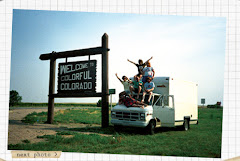
Nate decided to begin the Camino de Santiago in France so that he could cross the Pyrenees, and he chose the Chemin d’Arles rather than the far more popular Chemin du Puy because he wanted a more authentic pilgrim experience. ‘I didn’t come to make a lot of friends,’ he told me, ‘I could do that in Colorado.’ He said that he wanted both the challenge and the solitude of a winter pilgrimage. Nate’s description of his desires for his pilgrimage was, interestingly, quite similar to Janine’s description of “religious pilgrims”: he wanted the chance to meditate and reflect on and absorb his surroundings and his experience without the distraction of many other hikers, although he would not have called that prayer.

He said he was surprised by the number of people he had talked to who made the same two observations: 'You will earn a lot of merit by doing the Camino in winter' and 'you ought to do it in summer, it's better'. Ensuing conversation revealed that 'merit' resulted from increasing the hardship of what was seen to be an already very arduous undertaking by doing it in cold and possibly inclement weather. 'Better', on the other hand, was usually equated with 'warmer', though it could also mean that there would be more pilgrims on the Chemin. (The idea that he might in fact enjoy the silence all around him was apparently difficult to imagine.) Suitably clad and equipped, however, and taking certain sensible precautions, the only major drawback to a winter journey, according to Nate, is that the days are far too short.

With a drastically reduced amount of daylight you need to be considerably more organized than you might be in summer, not only with respect to places of interest, but also so as not to be caught in the dark with nowhere to sleep. Especially in winter, and especially on the Chemin d’Arles, it is necessary to be certain that you will arrive at the place where you will sleep before night. Gites in France offer low-cost lodging to hikers on the GR65. They are owned by individuals, churches, or municipalities, and the quality of the facilities varies widely. Many have cooking facilities, and all have showers (although not necessarily hot water) and toilets. Whereas in Spain it is necessary to show the pilgrim’s passport in order to obtain lodging at an albergue or refugio, anyone is free to use the French gites. However, the gites do not appear as frequently on the trail as the refugios, and because they are open to all, they can be more crowded.

As far as attitudes towards solitude go, it’s also worth noting that the people who come from other countries to make the pilgrimage in France are usually choosing to hike for days or weeks in a country whose language they do not speak. Nate is a good example of this; although he speaks a certain amount of Spanish, he speaks almost no French, and has been surprised by how few people here speak English. However, a willingness to undertake this sort of journey even knowing that your opportunities not only for conversation but also for basic aid will of necessity be limited by your inability to communicate indicates a certain personal bent, and one that is perhaps less intimidated by solitude.

I went to the woods because I wished to live deliberately, to front only the essential facts of life, and see if I could not learn what it had to teach, and not, when I came to die, discover that I had not lived. - Henry David Thoreau

27.11.06

I spent all day yesterday watching the grass grow / and what I learned is that grass really grows slow ...


Now that my time here is drawing short, I’ve started to wonder about what it will be like to come home. This has been such a bizarre experience, in many ways, and it’s been incredibly, unbelievably, breathtakingly fast. So much to integrate in such a brief span. (Pause to ponder the ontological and epistemological dilemma?) It’s been almost like being punched in the stomach, or having the wind knocked out of you. You have to let your lungs refill, slowly. And at first you screw your eyes up; you have to clutch your stomach for a minute before you can blink, and look about you. And even though it feels good to breathe, it hurts a little, too.

Weird image, right? But it fits, in its warped little way. I think that one of the things that no one could tell you before you did something like this is that it isn’t exactly fun. First, you wouldn’t believe them if they told you, and second, I think once you’re home and distant the things you miss become more prominent. I think in the same way that, here in France, I’ve missed being able to pinpoint and evaluate people and things the way that I can in the States, I will, once I go home, feel the absence of other people who know that these familiar things do indeed have different names, different ways of being described. I learned them. I feel like … that’s something.

I’m foundering, here. It’s absurd how tired I am. I had a lovely-but-strange conversation with my grandmother last night – yesterday was her birthday – in which she shared with me her hope that I’ll get married before she dies. Actually, it began with her telling me at length about her neighbor, whose cochlear implant surgery transformed her life, and the most meaningful example of this transformation is, of course, that immediately afterwards she began a wonderful relationship with the most wonderful man. His drawback, evidently, is that he has to do everything his own way, and, after six months of dating, he hasn’t yet asked her to marry him. Letting pass the assumption that he was the one who must perforce do the asking, I merely remarked that six months didn’t seem all that long to me, barring the intervention of buns and ovens and things of that nature. I learned, to my great surprise, that my insatiably traditional grandmother thought six months was quite sufficient, and that long engagements were also quite silly. The Berlitz approach to relationships, I suppose. I almost fell over when she said that she thought it was best for people to spend as much time together as possible when dating – thus facilitating the total immersion. I’m not sure if this is coming from the point of view that it’s best to rope the man in and tie him down before he can get away, or if it’s more a case of well-does-it-really-signify-who-we-marry-anyway, but it was all a bit too “truth universally acknowledged” for my comfort.

I suppose I’m saying all this because it kind of blindsided me. Not having my grandmother tell me that she wanted me to get married (and for the record I don’t know that she’d repeat the same logic if asked another time, being notoriously capricious in her ideology), but rather the concrete confirmation of someone having a vision of life so utterly different from my own. That she and I were so literally in such completely different places. She’s planning my imaginary wedding from her kitchen in Tennessee, oblivious to my actual life here in France. And I’m here, inhabiting a life as different from that as if it were on Mars.

So coming home. It’s not just the knowledge that everyone will think I’m pretentious if I’m fussy about cheese, or use French phrases because the English expressions don’t suffice, or that I won’t be able to find my favorite brand of cookies. I feel like I’ve been thrown off balance, and now that I’m finally getting my footing again, I’m getting hit from the other side.

I am as comfortless as a pilgrim with peas in his shoes -- and as cold as Charity, Chastity or any other Virtue. - Lord Byron