9.8.09

Miina somethingsomething mumbletypeg


I'm unclear about why there is no #1 but support that philosophy, Miina-ke.

2. How do you like your steak? Viewed from a photograph.


3. What was the last film you saw at the cinema? The latest Harry Potter. (Which irked me.)

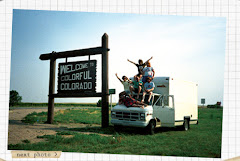
5. If you could live anywhere in the world where would it be? Boulder, CO

9. Favorite place to eat? In front of my open refrigerator.

10. Favorite dressing? Uhm - window... ?

11.What kind of vehicle do you drive? Multiple bus routes. Sometimes a bike.

12. What are your favorite clothes? The clean ones. (I cut out all the labels, but they're secretly from Banana.)

13. Where would you visit if you had the chance? Adult-hood.

15. Where would you want to retire? Oh, I couldn't.


16. Favorite time of day? Crepusculo.

18. What is your favorite sport to watch? Tennis.

22. What would surprise people about you? That I believe in soulmates.

25. What did you want to be when you were little? A mermaid. (And I still do.)

26. How many times have you been in love? Four.

28. Are you a cat or dog person? Dog. Cats freak me out.

30. Do you always wear your seat belt? Yes unequivocally.

31. Been in a car accident? Numerous.

32. Any pet peeves? Hypocrisy.

34. Favorite Flower? Hydrangeas.

35. Favorite ice cream? Nope.

37. How many times did you fail your driver's test? 0. I've never failed a test.

39. At which store would you choose to max out your credit card? Credit cards - so quaint. (I don't have one, but I could see myself losing total control at Williams-Sonoma, Sur le Table, Patagonia, or See Jane Run.)

42. Broccoli? Schmockoli.

.43. What was your favorite vacation? With the Go-Gos.

44. Last person you went out to dinner with? Lisa.

45. What are you listening to right now? Badly Drawn Boy.

46. What is your favorite color? Green.

50. Coffee drinker? Yes. Well - more of a Coffee Admirer, really. I love it, but I don't indulge often. (I have a similar relationship with tequila and artisanal cheese.)

You might be dating an engineer if ...


A work in progress at this point; each day inspires numerous epiphanic insights into Geek Perspective.

1) ...he's whispering in your ear throughout the new Harry Potter film. To explain the physics behind Quidditch.


2) ...he stares mesmerized at your iPhoto mosaic screensaver for ages, trying to figure out the complexities of its programming.

3) ...you catch him mumbling in his sleep about van der Waals forces.

4) ...he attempts to clarify your hazy understanding of the origins of the universe, blissfully unaware that your interest in the Big Bang Theory is limited to its next season on CBS.

5) ...he assures you of the impossibility of your conviction that your MacBook now refuses to pick up the neighbors' wireless signal because it has suddenly sprouted a conscience.

6) ...his idea of an enviable babe magnet is Richard Feynman.

7) ...he's uncomfortable with allowing you to believe that the internal combustion engine is one of the 5 simple machines.

8) ...you realize that the romantic mood music you've been hearing in the background is actually the soundtrack from Star Wars.

26.4.08

The worth of things ...


... can't be measured by what they cost but by what they cost you to get them. If anything costs you your faith or your family, then the price is too high, and there are some things that will never wear out.

17.1.07

Drinking is a way of ending the day. - Ernest Hemingway


Evidently, it's a relatively universally-prized way of ending the year, as well.

My best friend and I realized this year that spending New Year's Eve together has become an a posteriori tradition of ours. It's been years since either of us watched the ball drop at all, much less with someone with whom we were involved. We make an event of getting ready, slither into our slinkiest dresses and our faux-Manolos (which this year occasioned a feisty ass-size comparison, adjudicated by Morgan's long-suffering roommate) and indulge outrageously in the opportunity to be fabulous. For me, this past New Year's Eve was my first grownup night out with old friends in my hometown in half a year, during which I learned a new language, lived with four different families on a different continent, almost visited Africa, got into the Peace Corps, witnessed my mother's incipient nervous breakdown, swore off sex completely and then fell off the wagon (several times), moved on, and thought about myself far too much.

It was so, so good to come home. And have a drink.

We had dinner at one of my favorite Memphis restaurants, a place downtown called Lolo's Table, that was served in courses, delicious without doubt, but (for me) unsatisfyingly French. (An utterly personal issue resolved by the utterly excellent bread pudding at the end, which doesn't exist in France, and the free champagne, which also helped to numb the shock of how much the whole business cost. I won't note it here, because there's a chance my parents might read this, and I refuse to precipitate their heart palpitations any more than I do already.) I discovered that I had completely forgotten the solicitous dispatch of American waiters; it was almost unnerving to have our pleasant server take any notice of us after the food had arrived. And of course I ordered and tasted the wine with the adroit smugness that is, I firmly maintain, the right of the hapless etudiante returning from France.

Martinis at Swig (damn, they can make them dry), champagne at Tsunami (also the location of the obligatory accidental encounter with the Preppy Posse, who insist on travelling in packs and which includes an ex whom I still can't decide if it was good to see), and hours later I woke up on the first morning of the New Year on Morgan's futon, mercifully in pajamas but still wearing makeup, with her cat purring on my chest and my fingers curled around what proved to be my earrings from the night before. Fumbling over the coffee table for my watch, I noticed the cracker-crumbs strewn in joyous confetti-profusion on the floor; I dragged my eyes up to the squashy remnants of cheese and the overturned box of rosemary-and-olive-oil Triscuits bedecking the table, and a vague memory of feasting sometime after five am surfaced, blearily.

After we cleared away the celebratory detritus of two single twentysomething girls (okay, I cleared, he mewed until I located the Friskies) and efforts both to figure out the coffeemaker and to rouse Morgan proved equally ineffectual, Smokey and I repaired to the porch and curled up together on the glider. I remember when she bought it, a hundred years ago, in Mississippi, and I've sat on it through many states of mind. I tucked my feet underneath me, lit a cigarette, and stared through the screens down towards the New Year's Monday morning traffic on Poplar.

Ever since I got back from France, it's seemed to me that everyone drives at breakneck speed. Granted, I was terrified continually in France - one quite literally takes one's life in one's hands both as cyclist and pedestrian, because they've no intention of stopping for you. Perhaps it's because I'm driving myself again - I'm still not used to it, and I'm as childishly excited every time I go out to my car as a sixteen-year-old with new-minted keys and a license still warm from the laminator.

I wondered if there's ever a time in your life when you find yourself about where you thought you'd be, a year ago. And I wondered how I'd feel about it, if I found myself at such a moment. And, if I thought of myself as a purposeful individual, what it meant that my life was such a continual surprise.

By ten am on the first day of 2007, I had already shamelessly disowned my resolution to think less about myself.


we don't know, so we wait for tomorrow

we don't know, so we only go forward

- tegan and sara


Choices scattered in front of me like cracker-crumbs. Cleaning up messes I could only hazily remember making. Wondering if this year will be an auspicious one, and swallowing the awareness that I've no idea where I'll be, next time.

Too much, on an empty stomach.

The only way to digest it all, if your hometown is the birthplace of the blues, is to drag your closest friend out of bed and let her take you out for breakfast at one in the afternoon. The achingly enormous existential thorniness of your twenties, you find, is smoothed down quite satisfactorily by biscuits and gravy, diner coffee in the heavy white mug, and cheese grits.


Sometimes too much to drink is barely enough. - Mark Twain

26.12.06

I wheeled around because I / didn't hear what you had said / and saw you dancin' with Elihu / up on Leemor's bed ...


... and I was foggy, rather groggy / You helped me to my car / the binding belt enclosing me / A sample in a jar ...


So, it came out several months ago, but I was away ... I couldn't believe it when I got my Christmas present from my favorite four boys today.

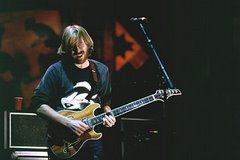
On top of all the other lovely things about coming home, I discovered that Phish has released a recording of their first real, out-of-the-Northeast tour, which happened in 1988, in, of all places, Colorado. Here's what Rolling Stone had to say about it:

Long before Phish replaced the Grateful Dead as America's greatest jam band, the foursome was one goofy-ass bar act. This three-CD set documents Phish's first trip outside their Northeast stomping ground: a 1988 seven-date tour in the Rocky Mountain state. Opting for concise compositions instead of expansive, noodly jams, Colorado '88 is a surprisingly crisp compilation that shows off the band's chops with early, by-the-numbers versions of classics like "You Enjoy Myself" and "Fluffhead." There's also a mountain of rarities, including "Harpua," the fantastical story of a guy named Jimmy, his dog and a doomed cat called Poster Nutbag that has attained mythical status among the Phish phaithful.


So here's the list:

Disc One
1. The Curtain With
2. The Sloth
3. Icculus
4. Colonel Forbin's Ascent
5. Fly Famous Mockingbird
6. I Didn't Know
7. Maiden Voyage
8. Timber
9. Harpua

Disc Two
1. Fluffhead
2. Run Like An Antelope
3. Sneaking Sally Thru The Alley
4. Light Up Or Leave Me Alone
6. I Know A Little
7. The Man Who Stepped Into Yesterday
8. Avenu Malkenu
9. The Man Who Stepped Into Yesterday
10. Flat Fee
11. McGrupp And The Watchful Hosemasters
12. Alumni Blues
13. A Letter To Jimmy Page
14. Alumni Blues

Disc Three
1. Camel Walk
2. Wilson
3. No Dogs Allowed
4. Mike's Song
5. I Am Hydrogen
6. Weekapaug Groove
7. You Enjoy Myself
8. Cities
9. Dave's Energy Guide
10. Cities
11. AC/DC Bag
12. Corinna
13. Thank You


You know that I dislike as much as anyone the idea of being one of those aging jam-band phans who yearn for the old days of going on Summer Tour, reminisce about 40-minute YEMs, nine-hour shows, fire spinners on the lot, Magic Hat and veggie burritos at 2 am. We all know that, happy as we were on New Year's Eve 2002, nothing was the same after the hiatus, and I can't say that songs like Army of One stir anything all that primal in me. But I must confess that I do have my moments. I remember the first time I saw a glowstick war, or Fishman play the vacuum. The feeling when they play the opening chords to Divided Sky. Shaggy-haired Trey. Waste. Singing to my dog, whose name is Wilson, that I'd punch him in the eye. When they walked onto the stage the last time I saw them at Deer Creek, the first night, and opened with Loving Cup. Yeah, when they played Prince Caspian, I cried. I grew up listening to all the best music from the sixties; my dad took me to shows from before I can remember, and I saw the Dead play the Pyramid three months before Jerry died. But I *grew up* to Phish - say what you will, Phish was ours, we barefoot children, drinking bathtub gin and wading in the velvet sea, who know who's in the freezer and what the banker said, and didn't believe the florist. And just now I'd give a great deal to go back to 1996 and hear Character Zero for the first time.


Hey, boys. Thanks for all the Phish.

20.12.06

In my mind, I'm goin' to Carolina ...


Can't you see the sunshine
Can't you just feel the moonshine
Maybe just like a friend of mine
It hit me from behind
Yes I'm goin' to Carolina in my mind


Lemme tell you some things I love about America.

I love huge, wide sidewalks. Swipes of concrete where you can walk without stumbling over someone's garbage bins, or their car straddling the kerb, or the ubiquitous pile of little French dog caca, or that never-graceful dance of confusion with passersby, where you try to figure out who has the right of way.

I love 24-hour supermarkets and gas stations and convenience stores and boites de nuit and always something to do, someone to talk to, someone to call. The ability to banter at the bank, the market, the shop on the corner.


I love houses that aren't beige, roofs that aren't the same red tile.

I love many faces, many voices, many languages on the same street. The French all look the same. The same bodies, the same trends, the same pointy-toed eagle talon boots and faux-fur trimmed vests. The same silver-and-black striped shirts, and so many buckles on everything that they could be Pilgrims.

Here I walk down Mission Street past Mexican men with slicked-back hair, black puffy jackets, and Adidas polished too-white peeking from the cuffs of their extravagantly baggy jeans.


Internet that works nearly all the time, and very, very fast.

Cheap cell phone minutes.

California wine.

Avocados, 4 for $1. Limes, 10 for $1.

American greenbacks.

Strong black coffee in those heavy white diner mugs, on a chipped formica or peeling woodgrain table, in a vinyl-covered booth at half-past midnight.

Pizza with tomato sauce and without creme fraiche. Or lardons.

American microwbrews. Fuck, American brews, whatever they are.

Large pillows, large towels, thick mattresses, hot showers, dryers (for clothes and for hair), comfortable socks, Christmas lights, fog around Sutro Tower.

The American Postal Service, bless them.

Grey's Anatomy.

The Sunday Times.

Gingerbread houses.

Knowing the correct usage of punctuation.

Knowing how much my cash is actually worth.

American coffee. American coffee. American coffee. American coffee. American coffee.

The Food Network.

Graduate school.

Secondhand bookstores.

Refills.


Dark and silent last night
I think I might have heard the highway calling
Geese in flight and dogs that bite
Signs that might be omens say I'm going, going
I'm goin' to Carolina in my mind


People who have travelled and come back and gone away again.

The ability to leave, and have a place to come home to.

My own apartment.

My friends, who, much to my surprise and pleasure, missed me.


With a holy host of others standing round me
Still I'm on the dark side of the moon
And it seems like it goes on like this forever
You must forgive me
If I'm up and gone to Carolina in my mind


Hey guys - I finally had that cup of coffee, in the paper cup with the little sleeve and the plastic lid with that frustrating little hole through which to scald your tongue. I drank it walking down the street, while talking on my cell phone.

I'm going to the movies, where the previews are too long but not as long as the half-hour French ones, and where the popcorn comes with extra butter and isn't sweet. Then I'm going to eat Chinese food in the middle of the night, out of the paper cartons and with those wooden chopsticks that you break apart and then rub the ends together to smooth out the splinters.

I'm going to a brewery, to hear bluegrass and drink real beer. I'm ordering a hamburger. A big one. With melted yellow cheddar cheese. And fries, not frites, that will come beside my sandwich instead of in the middle of it. And ketchup that doesn't taste like that tomato sauce that comes in the toothpaste-tube things at the Casino.

I'm still waiting for my first diet Mountain Dew.

Tomorrow, I get to see my father, who's brining a turkey because my family kept Christmas on hold til I could be there. I'm going to eat my grandmother's sweet potato casserole, and the cornbread dressing she makes completely from scratch, and her grapefruit and avocado salad, and that quintessentially Southern truc with the apples and bananas and walnuts and celery and mayonnaise. And three kinds of pie. And iced tea, even in December. And I'll pour gravy over all of it, and leave my squashy buttered dinner roll on the plate the whole time.

It's a beautiful thing.


Say nice things about me 'cause I'm gone,
Southbound
You'll have to carry on without me
'cause I'm gone, I'm gone
I'm gone to Carolina in my mind

For those who have aussi been forced to traduire les paroles de Georges Bressons


For my SIT cohort: Vous me manquez, deja.

There are so many, many things about the time we spent in France that I won't ever be able to explain to anyone else.

You are the thing I miss most about France; the people who understand my awe and terror of Leila (Ghregh??), who were likewise trapped for a semester in salles trois, quatre, and tres, and who likewise learned which ordinateurs dans la salle informatique were the least unacceptable (including the one you had to beat on to make it work properly, selon the directions ecrit on the petit panneau).

We loved Eric and loathed the Atelier d'Expression; we suffered ensemble through brebis and Aveyron and Ariege and torrential rains and beaucoup trop many tours.

We answered the question "What *surprises* you about France?" for the 200th time with smiles and without flogging anyone to death.

We parl-ed in constant Franglish (and sometimes even Frangleshpanol).

We discovered the English books and American TV shows a la Mediatheque, and we escaped from all those Algerian/Tunisian/Moroccan/"French"men without too much incident, eh?

We introduced Paris to the Car Bomb.

We outed Greg and Laura.

We learned what happens when you put unleaded fuel in a diesel engine.

We cartooned our teachers.

We know which one of us speaks the slowest, whose voices are so soft you can't hear them on the telephone, who has to preface all her interactions with French people with a long self-deprecatory preamble, who absolutely cannot speak in public, who doesn't like space, who touches everyone's hair, who makes the most derisive faces.

Who *always* has to talk with her hands. :)

Without Sam, who was there for the Thierry debacle from the beginning and who knew but didn't judge about the girl from the Lolita Cafe whose calls I quit returning, I never would have shared l'Ancienne Belgique, or eaten the best Tibetan meal of my life in St. Germain. I want to retire to your sheep farm, in Scotland, New Zealand, the San Juan Islands ...

Without Marissa and Greg, I never would've known for sure that no man is sorry that he'll never carry a baby, or that someone can love both Tom Waits and cute puppies with the same fervor, or had someone to smoke, drink gin and tonic and talk dirty with, or learned the merits of loose-leaf Gauloise, or played pool beside the Mediterranean.

Without Tricia, no one would have understood why Joey was NOT SPEAKING FRENCH! or the debate over the meaning of San Diego, or the only way to bag a classy lady (take her to the gun show ... and see if she likes the goods), or why I spent a French semester in a glass case of emotion. Or the deep significance of "America - fuck yeah!" and "Qu'est-ce que c'est haut, chien?"

Without Matt, I'd never have learned the difference between porn and "erotic films," or been able to meaningfully discuss the degustation of fried chicken, biscuits, and macaroni and cheese, or the joy of leaving your bread on the plate with your food.

Without Rebecca, no one would have answered my English with French, and there would be no one to carry on my Santiago de Compostela legacy. (I'm counting on you, girl.)

Without Ellen, who should absolutely NOT become an RA, I'd never have given a shit about caves or ultimate frisbee, or quaked in fear merely at someone's scowl, or learned to avoid Maison Pillon, or discovered the infinite variations possible for "Eeewww."

Without Laura, there'd have been no one's love life about which to speculate, and I never would have met the only girl who could make ice interesting, and whose patience will surely one day merit canonization. Keep that one in line - I know you will. Will you invite me to the wedding if I give you guys an ice pick and a pair of giant tongs?

Without Abi, I'd never have eaten the closest approximation of real Mexican food France has ever seen, or listened to three different versions of Romeo and Juliet in succession, or been able to replace the birthday song with Estas son las mañanitas. (Gracias para siempre.)


Without Brittany, I'd have had no pirates in France, no fellow Boulder, no one who was sick more than I was, no stories of Enrique, no one with whom to faire le bis back in Colorado. "Malheureusement, j'ai casse mon parapluie dans l'Aveyron! Et toi, tu as casse le tien, aussi, je crois. Il y avait beacoup trop du vente! Et Greg aussi, il a perdu le sien quand meme. Il faut accheter un autre, a cause de la pluie, sinon on va etre trop mouiller!" (I wanna say something. I'm gonna put it out there; if you like it, you can take it, if you don't, send it right back ... I want to be on you.)

There aren't any words for you, Julie, my Berkeley copine. Thanks for being at St Bertrand de Comminges that day, for watching the hours of montages, for laughing at Pink and Christina Aguilera, for eating raclette, for loving Ani and Orishas and Alicia Alonso, for knowing Dar Williams and Mollie Katzen, for telling me about Cuba and helping me decide about Africa, for that day at the library. For being the other Californian, the other dancer, the other American in the French host family milieu. Cheeseboard, Lovejoy's, the Ferry Building Farmer's Market, Cowgirl Creamery, Point Reyes, burritos in the Mission, Big Sur await. Come to Boulder and I'll introduce you to the snow.

Vooooiiillaaa. Tout a fait.

Ai, ai, ai.

Si vous n'existeriez pas, dites-moi comment I would have made it through the past four months. Moi, je n'ai aucune idee. Quand je suis arrivee en France, I would not have believed how much you all would mean to me. Mais, vraiment. *Vachement.*

A bientot, kids, et je vous remercie pour tous les fromages.

What sets worlds in motion is the interplay of differences, their attractions and repulsions.

Life is plurality, death is uniformity.

By suppressing differences and pecularities, by eliminating different civilizations and cultures, progress weakens life and favors death.

The ideal of a single civilization for everyone, implicit in the cult of progress and technique, impoverishes and mutilates us.

Every view of the world that becomes extinct, every culture that disappears, diminishes a possibility of life.

- Octavio Paz

I do not want my house to be walled in on all sides and my windows to be stuffed. I want the cultures of all the lands to be blown about my house ...


... as freely as possible. But I refuse to be blown off my feet by any. - Gandhi

For this project, I interviewed three French people, an American, and an Englishwoman. Perhaps the most interesting part of the project for me was to observe the differences in their attitudes towards the hardships of the Camino. The three French people were much more interested in the social aspects of the pilgrimage, and the two who hiked on the Camino Frances in Spain were not satisfied at all with the Spanish part of their pilgrimage. Everyone told me that the pilgrimage in Spain is completely different from the pilgrimage in France. The three French people, truly, seemed far less willing to adapt themselves to different habits and attitudes. But, paradoxically, they were more interested in the community of the pilgrimage than the other two. The American had chosen to make the pilgrimage at a time when he was less likely to encounter other pilgrims, and the Englishwoman had not wanted companionship, either. And, she seemed farmore affected by the pilgrimage than the French and described more profound personal changes.

These attitudes towards the Camino illustrated, to me, the profound French need to separate religious life from secular life. The Chemin de St Jacques de Compostelle is no longer publicized by the church but rather by organizations like the Society of Friends of the Way of St James, who work voluntarily to increase awareness of and interest in the Chemin. (Although, interestingly enough, judges in Spain have been known to assign the Camino de Santiago in lieu of jailtime for certain petty crimes. Once again, the Spanish take the Camino de Santiago much more seriously.)

The road itself is part of the network of hiking trails that run through France. The various churches and shrines along the way are less holy sites than historical sites. Even the profoundly Catholic Monique needed to claim the religious artifacts on the Chemin as part of the patrimony, her historical heritage as French. It seems important that French interest in the Chemin increased greatly after it became a UNESCO historical site, as if it had become somehow more acceptable to make the pilgrimage as a historical or patrimonial experience rather than a religious quest.

However, despite the obvious differences, it is in some ways difficult to say that the pilgrim of today is vastly different from the pilgrim of the Middle Ages. The difference between a "pilgrim" and a "tourist" is necessarily somewhat obscure. Both leave their homes because they have a need. There are things they want to see, places to which they feel compelled to go. Whether these needs are motivated by God or by some inner personal call seems a semantic distinction. (However, this distinction was more necessary for the French pilgrims than for the others.)

It is also interesting to note that American pilgrims, in particular, talk about the feelings of depression and despondency that often happen when the pilgrim returns home. Pilgrim guidebooks and websites offer suggestions for working through the unhappiness when the pilgrim must return to his normal life. When I mentioned this to Monique, she was surprised that anyone would feel sad to finish the pilgrimage.
When I asked Anne why she thought that people chose to make the pilgrimage, she told me that "Each pilgrim is individually called by the Camino. The Way chooses us, as it has for centuries. We do not make that choice. And it is up to us today, as it was for pilgrims in the Middle Ages, to discover the reason for the call – now, as we walk the Chemin, or later, after we have returned home."

Prayer does not change God ...


... but it changes him who prays. - Soren Kierkegaard

The mother of my host mother introduced me to another former pilgrim, an Englishwoman who has lived in the tiny village of Mann for 12 years and who barely speaks a word of French. She made the pilgrimage to Compostela 8 years ago, after her husband died, and she would like to make it again during a Jubilee Year, when the Feast of St James falls on a Sunday.

Anne told me that she started her pilgrimage without any set idea of how to conduct herself. Like many pilgrims, she wanted to be open and to allow circumstances and surroundings dictate her choices. Although she is not Catholic, she said that she began to attend Mass whenever she could along the way. At each pilgrim mass along the Chemin, the priest reads the name and nationality of each pilgrim. She spent long hours in contemplation and prayer, and each religious symbol she saw infused her with a sense of the holy.

However, it was not only the churches and religious relics that had this power, for Anne. She said that the people she met, the different paths she walked, the sun, the rain, the trees, the natural world, all seemed holy to her. She said that she had begun the Chemin very angry, and that she needed the struggle of the pilgrimage to become humble.
Anne noticed that people began to wave at her as she passed along the road. « At first I wondered why », she said. « Then I realized that I wasn't a tourist, not even a stranger. I had been walking through their village for centuries, because I was a pilgrim. »
And she told me that, slowly, she began to see like a pilgrim. To see that everywhere she looked, in even the smallest town, there was not just a church, but a cathedral, a beautiful ornate structure that had taken generations to build. A father had laid the foundation, his son and his son's son had built the walls, and their children had put on the roof. Anne was struck by the power that emanated from these works of art, shrines built with love and dedication and belief. She told me that the best pilgrims learned how to travel light, help other pilgrims and not damage or hurt anything along the way.
I asked her what she had taken away from the pilgrimage, and she told me that she had rediscovered her joy and gratitude at being alive. She said that the hospitality of the pilgrim way produced a warm feeling of goodwill.

Once upon a time there was an old country, wrapped up in habit and caution


... We have to transform our old France into a new country and marry it to its time. - Charles de Gaulle

I spoke with a couple close to seventy years old, both doctors, who had made the pilgrimage together 4 years ago. They repeated many of the things that Janine had told me, and they said that the best thing about the Chemin was stopping at a gite or albergue and meeting the same people you started out with on the first day of hiking. Monique, who talked much more than her husband, told me a lot about the history of the Chemin, much of which I knew already, but it was interesting to observe how much the connection to history affected her. She is also a devout Catholic, and she was very moved not only by the many religious shrines along the Chemin but also, for example, by walking along the same road as Charlemagne and Roland had used in their fight against the Moors. It was very impressive for me to hear Monique and her husband describe historical events as though they had occurred yesterday. While Monique was telling me about the people from different countries they had met on the Chemin, her husband interrupted to tell me that he liked people from all countries, everywhere, except the English. He detested the English. When I asked him why, he leaned forward and looked at me very seriously. He said, very slowly, “Because the English, they burned Joan of Arc.”

Monique remembered a man who had started out from his home in the Netherlands; when they met him, he had already walked 1 000 kilometers. They also walked with people from Canada, Italy, Holland, Brazil, Germany, Sweden, Austria, and Australia. They still keep in contact with some of their friends from the pilgrimage. They also told me that most of the people who make the pilgrimage are more than 50 years old. One Canadian pilgrim celebrated his 70th birthday in Santiago, and there was a couple who had 80 years making the pilgrimage, also.

They both complained bitterly about the rhythm of the Spanish day. A typical day has you loading your pack at 6 in the morning and beginning the trail while it is still dark. Rest stops occur midmorning, wherever you can fill your water bottle and buy a cup of coffee or a sandwich. After the midmorning break, you walk for the rest of the day, stopping for brief rests, for lunch, or to take care of your feet. It took about 8 hours to reach the next village, meaning that they usually arrived in a village at the moment when the entire village shut down for siesta, and it was necessary to wait several hours to buy food and water for the next day. They were also frustrated because the Spanish, habitually, do not dine until 10 o’clock at night. But they discovered many restaurants that offered a special Menu de Peregrino starting at 8 o’clock, and by 10 they could be in bed with their earplugs.

When I asked Monique what people looked for on the Chemin, she said that she thought we all seek something at some time in our lives, even if it is just a new awareness or perspective on life. Sometimes we do not even know what it is we seek.

Bendición de la Escarcela o Morral

No sin razón los que vienen a visitar a los santos reciben en la iglesia el morral bendito. Pues cuando los enviamos con motivo de hacer penitencia al santuario de los santos, les damos un morral bendito, según el rito eclesiástico, diciéndoles:

En nombre de nuestro Señor Jesucristo, recibe este morral hábito de tu peregrinación, para que castigado y enmendado te apresures en llegar a los pies de Santiago, a donde ansías llegar, y para que después de haber hecho el viaje vuelvas al lado nuestro con gozo, con la ayuda de Dios, que vive y reina por los siglos de los siglos.
Amén

Bendición del Bordón o Báculo

No sin razón los que vienen a visitar a los santos reciben en la iglesia el báculo y el morral bendito. Pues cuando los enviamos con motivo de hacer penitencia al santuario de los santos, les damos el báculo, según el rito eclesiástico, diciéndoles:

Recibe este báculo que sea como sustento de la marcha y del trabajo, para el camino de tu peregrinación, para que puedas vencer las catervas del enemigo y llegar seguro a los pies de Santiago, y después de hecho el viaje, volver junto a nos con alegría, con la anuencia del mismo Dios, que vive y reina por los siglos de los siglos.
Amén

Sobre el Camino de Santiago y sus peregrinos:


Todos, pues han de venerar a Santiago en todas partes, el cual socorre sin demora en todos los lugares a los que a él acuden.... Ahora vamos a tratar del camino de los peregrinos.
El camino de peregrinación es cosa muy buena, pero es estrecho. Pues es estrecho el camino que conduce al hombre a la vida; en cambio, ancho y espacioso el que conduce a la muerte. El camino de peregrinación es para los buenos: carencia de vicios, mortificación del cuerpo, aumento de las virtudes, perdón de los pecados, penitencia de los penitentes, camino de los justos, amor de los santos, fe en la resurrección y premio de los bienaventurados, alejamiento del infierno, protección de los cielos. Aleja de los suculentos manjares, hace desaparecer la voraz obesidad, refrena la voluptuosidad, contiene los apetitos de la carne que luchan contra la fortaleza del alma, purifica el espíritu, invita al hombre a la vida contemplativa, humilla a los altos, enaltece a los humildes, ama la pobreza. Odia el censo de aquel a quien domina la avaricia; en cambio del que lo distirbuye entre los pobres, lo ama. Premia a los austeros y que obran bien; en cambio, a los avaros y pecadores no los arranca de las garras del pecado.
Moralejo, S., C. Torres, y J. Feo. Liber Sancti Jacobi; Codex Calixtinus. Santiago de Compostela, 1951

There are days when solitude is a heady wine that intoxicates you with freedom, others when it is a bitter tonic ...


... and still others when it is a poison that makes you beat your head against the wall. - Colette

Today I interviewed not a former pilgrim but an expectant pilgrim, an American guy named Nate who’d come to Toulouse to faire the Chemin d’Arles, and had come now because he wanted to make the pilgrimage in the winter. I met him for breakfast; two days here and he’d somehow found what must be the only place in Toulouse that serves something that approximates pancakes. Alright, they’re crepes, but at least he didn’t eat them with Nutella. (Although, sadly, no real coffee. I had three “cafes,” which means espresso that gets cold unless you swallow the whole thing in one shot.) When I spoke to him on the phone, I formed certain expectations from his gravelly Robert-Redford-in-Out-of-Africa voice. He didn’t disappoint – I walked into the café to find a ginger-bearded giant in a flannel shirt. I kept looking for Babe the Blue Ox, or for him to call out for rashers of bacon.

He’s already made several ‘pilgrimages’, if you will. He’s done the Appalachian Trail twice, as a thruhiker, which means that he started in Georgia and ended up, six months plus tard, in Maine. And last summer he went to Peru (which, incidentally, seems to be the place to go these days; I’ve met so many people who have recently visited there. Trendwatchers, take note.) to hike the Inca Trail to Machu Picchu.

It’s interesting for me to note the differences between the French pilgrims I interview and those of other nationalities. Without exception, all of the French with whom I have spoken have focused on the communal aspects of the pilgrimage, and Nate came to France with the exact opposite interest. He was enjoying the food here in Toulouse, although I had to agree with him that once you’ve seen a hundred old churches, they begin to lose some of their romance. (Actually, for me, it was all over once I had seen Notre Dame in Paris.) When we spoke, he had already visisted St Sernin and discovered the Rue du Taur, which is named the Street of the Bull because St Sernin, the first bishop of Toulouse, was martyred by being dragged along this street behind a bull. Just a cultural note.

Nate decided to begin the Camino de Santiago in France so that he could cross the Pyrenees, and he chose the Chemin d’Arles rather than the far more popular Chemin du Puy because he wanted a more authentic pilgrim experience. ‘I didn’t come to make a lot of friends,’ he told me, ‘I could do that in Colorado.’ He said that he wanted both the challenge and the solitude of a winter pilgrimage. Nate’s description of his desires for his pilgrimage was, interestingly, quite similar to Janine’s description of “religious pilgrims”: he wanted the chance to meditate and reflect on and absorb his surroundings and his experience without the distraction of many other hikers, although he would not have called that prayer.

He said he was surprised by the number of people he had talked to who made the same two observations: 'You will earn a lot of merit by doing the Camino in winter' and 'you ought to do it in summer, it's better'. Ensuing conversation revealed that 'merit' resulted from increasing the hardship of what was seen to be an already very arduous undertaking by doing it in cold and possibly inclement weather. 'Better', on the other hand, was usually equated with 'warmer', though it could also mean that there would be more pilgrims on the Chemin. (The idea that he might in fact enjoy the silence all around him was apparently difficult to imagine.) Suitably clad and equipped, however, and taking certain sensible precautions, the only major drawback to a winter journey, according to Nate, is that the days are far too short.

With a drastically reduced amount of daylight you need to be considerably more organized than you might be in summer, not only with respect to places of interest, but also so as not to be caught in the dark with nowhere to sleep. Especially in winter, and especially on the Chemin d’Arles, it is necessary to be certain that you will arrive at the place where you will sleep before night. Gites in France offer low-cost lodging to hikers on the GR65. They are owned by individuals, churches, or municipalities, and the quality of the facilities varies widely. Many have cooking facilities, and all have showers (although not necessarily hot water) and toilets. Whereas in Spain it is necessary to show the pilgrim’s passport in order to obtain lodging at an albergue or refugio, anyone is free to use the French gites. However, the gites do not appear as frequently on the trail as the refugios, and because they are open to all, they can be more crowded.

As far as attitudes towards solitude go, it’s also worth noting that the people who come from other countries to make the pilgrimage in France are usually choosing to hike for days or weeks in a country whose language they do not speak. Nate is a good example of this; although he speaks a certain amount of Spanish, he speaks almost no French, and has been surprised by how few people here speak English. However, a willingness to undertake this sort of journey even knowing that your opportunities not only for conversation but also for basic aid will of necessity be limited by your inability to communicate indicates a certain personal bent, and one that is perhaps less intimidated by solitude.

I went to the woods because I wished to live deliberately, to front only the essential facts of life, and see if I could not learn what it had to teach, and not, when I came to die, discover that I had not lived. - Henry David Thoreau

27.11.06

I spent all day yesterday watching the grass grow / and what I learned is that grass really grows slow ...


Now that my time here is drawing short, I’ve started to wonder about what it will be like to come home. This has been such a bizarre experience, in many ways, and it’s been incredibly, unbelievably, breathtakingly fast. So much to integrate in such a brief span. (Pause to ponder the ontological and epistemological dilemma?) It’s been almost like being punched in the stomach, or having the wind knocked out of you. You have to let your lungs refill, slowly. And at first you screw your eyes up; you have to clutch your stomach for a minute before you can blink, and look about you. And even though it feels good to breathe, it hurts a little, too.

Weird image, right? But it fits, in its warped little way. I think that one of the things that no one could tell you before you did something like this is that it isn’t exactly fun. First, you wouldn’t believe them if they told you, and second, I think once you’re home and distant the things you miss become more prominent. I think in the same way that, here in France, I’ve missed being able to pinpoint and evaluate people and things the way that I can in the States, I will, once I go home, feel the absence of other people who know that these familiar things do indeed have different names, different ways of being described. I learned them. I feel like … that’s something.

I’m foundering, here. It’s absurd how tired I am. I had a lovely-but-strange conversation with my grandmother last night – yesterday was her birthday – in which she shared with me her hope that I’ll get married before she dies. Actually, it began with her telling me at length about her neighbor, whose cochlear implant surgery transformed her life, and the most meaningful example of this transformation is, of course, that immediately afterwards she began a wonderful relationship with the most wonderful man. His drawback, evidently, is that he has to do everything his own way, and, after six months of dating, he hasn’t yet asked her to marry him. Letting pass the assumption that he was the one who must perforce do the asking, I merely remarked that six months didn’t seem all that long to me, barring the intervention of buns and ovens and things of that nature. I learned, to my great surprise, that my insatiably traditional grandmother thought six months was quite sufficient, and that long engagements were also quite silly. The Berlitz approach to relationships, I suppose. I almost fell over when she said that she thought it was best for people to spend as much time together as possible when dating – thus facilitating the total immersion. I’m not sure if this is coming from the point of view that it’s best to rope the man in and tie him down before he can get away, or if it’s more a case of well-does-it-really-signify-who-we-marry-anyway, but it was all a bit too “truth universally acknowledged” for my comfort.

I suppose I’m saying all this because it kind of blindsided me. Not having my grandmother tell me that she wanted me to get married (and for the record I don’t know that she’d repeat the same logic if asked another time, being notoriously capricious in her ideology), but rather the concrete confirmation of someone having a vision of life so utterly different from my own. That she and I were so literally in such completely different places. She’s planning my imaginary wedding from her kitchen in Tennessee, oblivious to my actual life here in France. And I’m here, inhabiting a life as different from that as if it were on Mars.

So coming home. It’s not just the knowledge that everyone will think I’m pretentious if I’m fussy about cheese, or use French phrases because the English expressions don’t suffice, or that I won’t be able to find my favorite brand of cookies. I feel like I’ve been thrown off balance, and now that I’m finally getting my footing again, I’m getting hit from the other side.

I am as comfortless as a pilgrim with peas in his shoes -- and as cold as Charity, Chastity or any other Virtue. - Lord Byron

The art of progress is to preserve order amid change and to preserve change amid order. - Alfred North Whitehead


It’s funny. Bizarre, almost. But I find as I grow in my acquaintance with myself, that the things I love the most are the things to which I have the most initial resistance.

One’s parents are always a good example. Those people who frustrate and demoralize you, whose attention and approbation you desire and who you are always certain you have failed to impress. But whose counsel shapes the decisions you make whether you intend or no.

I’ve tried not to be a writer, I’ve tried not to be a doctor. I’ve tried extremely hard not to define my relationships, at which I have failed spectacularly, as most of us do.

And France becomes another chose comme ça. I had this Babar-and-Madeleine understanding of French, and this Foucauldian adoration of France as a concept (which couldn’t be more vexed, complicated, inapropos, right?). And I came to France unhappy and dissatisfied with … well, with a great many things, I suppose. I’ve already pointed out that I was quite unhappy in Paris. And now I find myself missing it, find myself feeling like I found something there that I wasn’t quite ready to name or claim. I’ve become one of those American writers who love Paris. Well, each cliché guards a grain of truth, as they say.

Talking in clichés. At least an ability to talk in clichés signifies an ability to talk. It’s astounding, though, how much one can actually communicate with a vocabulary more limited than American political awareness. It’s conversation in the verbal Dust Bowl: you just have to make do with what you have. In my struggles with this language, I have asked my host family for the drought instead of the hair dryer. I have tried to explain the concept of a “giant ladle in the sky” (une grande louche en ciel), as the only way I knew how to describe the Big Dipper. They tell me that I speak French as though it's Spanish; I think because I can’t always suppress my impulse to pronounce all the letters in the words, and because I gesture so much when I speak. Once again, it’s functional rather than artistic. I came to France and learned to mime.

There are still a great many things I don’t understand. I can’t fathom how the French can pull off outrageously tapered jeans, or moccasin-type leather boots laced up to the knee, like fur trappers. I don’t understand why Converse cost 60 euros. I have lost all patience with squatting in the bathtub while I try to rinse off the soap before it dries on my skin, with the suggestion of warm water trickling from the end of the hose attached to the bathtub nozzle. (Granted the French use something like half the water we do in the States.) I have no idea how to exit conversations. I have yet to learn the French equivalent for "Alright, well, I gotta run, but I'll see you later." So I'm continually just saying "Well ..." and pointing in another direction, as if I'm signalling into the wings before I walk offstage. I could use more personal space. I’d like to be able to talk on the phone as much as I want; I’d like to go through an entire day without feeling like a buffoon (do I really accomplish that at home, though, either?); and I’ve reached a point where I wouldn’t mind dumping the entire contents of my backpack into an incinerator. But one can’t blame France for that.

I do know the side of the canal that has the best sidewalks.

I've learned how to dodge the fowl along my walk to school through the Jardin des Plantes. It’s still dark when I leave the house, and now it’s started getting cold, and I can see my breath in the mornings. By the time I get to the Jardin, though, the sun’s coming up, and actual roosters are crowing in the flowerbeds, and geese are padding along with orange beaks and outstretched necks, waiting for Christmas. Once a mama duck crossed the path in front of me, trailing her babies behind her and looking for all the world like she'd stepped out of Robert McClusky's Make Way for Ducklings.

I have become accustomed to the sound of churchbells. They sound every half-hour, at least, here, and at six in the evening when I walk home from the library, they’re glorious. Sometimes I forget to listen to them.

I got over my fear of the people sans domicile fixe, the functionally homeless who make their homes on the east side of the canal, among what look like dozens of bags of assorted cloths, squatting under every bridge like trolls.

I finally learned how to use the phone, how to buy stamps at the post office, how to ask for more salt, less salt, or no salt at all.

After hours of painstaking labour, thick-fingered fumbling hunched over my desk in the middle of the night, I taught myself to roll my own cigarettes. A habit I'll probably have to give up aux Etats-Unis. On a parle de missing things?


'I have done that,' says my memory. 'I cannot have done that,' says my pride, and remains adamant. At last - memory yields. - Nietzsche

21.10.06

The Road goes ever on and on, down from the door where it began. Now far ahead the Road has gone, and I must follow, if I can ...


... pursuing it with eager feet, until it joins some larger way, where many paths and errands meet.

And whither then? I cannot say. - Tolkien, The Hobbit


I find I am something of a hobbit, myself, of late.

I was talking a few postings ago about life here in Prat, where I've been left to muse quietly on the variegations of cheese degustation. It's funny; it's as though after whining for ages about being discontented, Toulouse shook my sweaty hands from her apronstrings and dropped me into an isolated corner of the country, 'to think about what I'd done.'

I've been doing a lot of thinking lately. Of course, I always do.

Another thing Bernard, my host father, is particular about is coffee. A man after my own heart, eh? They give me coffee - the lovely, excellent, perfect coffee from a drip coffeemaker that I have been craving for months - every morning, in a swollen cup like a bowl on a saucer, and I sit by myself and dip my bread in it and read my book and sip my coffee and look out the window at the foothills of the Pyrenees. But Bernard also has a little Nespresso machine that works with these little pellet things of espresso that he orders on the internet and of which he is charmingly proud. He loves to demonstrate the ease with which one can drop them into the machine, and then the two of us stand with folded arms and wait for the espresso to appear ('The pressure, the pressure is the thing, Avie,' he always says, and I nod as though I had no idea until he told me), staring anxiously at the spout as though waiting for an explosion.

He just walked in, actually, as I was writing this. 'Est-ce que tu veux un cafe, Avie?' No joke.

We share espresso a couple of hours after breakfast, again just after lunch, another around four or five in the afternoon, and the final cup after dinner. (After the first few nights of lying in my bed wondering how many verbs I could conjugate in my head, I found out there was decaf.) He loves to see if I can taste the difference between the ristretto, the arpeggio, the roma, and he was delighted when my preference was for the strongest one. I think my presence here is an excuse for the family to have all of their favorite things as often as he wants - if his wife notices how many pieces of chocolate he's had, or he flicks his eyes over her third glass of wine, it's all in the name of letting Avie try things.

I actually find myself lying quite a lot, for simplicity's sake. People are much happier when they can introduce you to something as though they invented it. And that's true, in a way. Everyone has their own manner of enjoying quelques choses, and thus, in France at least, each time is the first time. But more on that another time.

I do think that the quiet tasting of cheese, of wine, the appreciation of truly wonderful coffee - and indeed the insistence upon the necessity of such things - is quintessentially (attention: this is not to say *exclusively*) French, and is in itself a kind of resistance. We have a petit pause for a cup of espresso, and we have ten minutes where we sit on the terrace and talk about my studies, or the neighbor who insists on burning all his brush, or what lovely weather we're having even for the end of october, or how remarkably fine is the coffee.

Yes, it's irritating that the shops close for three hours in the middle of the day. It made it easier for me when I discovered this was irritating to the French, at times, as well. But one shrugs one's shoulders, raises one's palms, and says 'eh.' It's France. The culture of preservation and conservatism involves a distressing amount of navel-gazing, it's true. But it also cultivates a connosieurship that is built upon things that can all too easily be lost, or squandered. And it's incorporated into the rhythm of life with a minimum of fanfare.

It's a morsel of Zen, in its fashion. It's an ability to enjoy small things without impinging upon the rights or freedoms of any other person. And it supports itself, creating the space it needs to grow and thrive.

Life is nice in the little French garden of my mind. I'd like to stay and wear pink gloves and cultivate tomatoes and pansies. I'd like a little apartment three floors over the narrow street, with lavender shutters and rosemary in the windowbox.

I will also be happy to go, to get back to my cellphone and my literary theory, my madcap furious rush to learn everything there is to know from books, and in one day.

I will continue to take on too much, to try too hard, to fill my days too full of classes, works, aims, friends, troubles.

But life is long, and more than that, it's broad. There's room in it for the wrinkle between my eyebrows, for the callouses on my heels. You have to be willing to be unhappy, for a while. You're going to be anyway, from time to time. I would like, myself, to be able to see that not as a failure to live properly, as an affront to my sensibilities.

There's a French coffee press that's waiting for me in some box in some person's house, somewhere in Colorado. Sometime around three months from now I'll be living in my next apartment, my own apartment that's only mine, to which I have the only key. I'll be laughing at my students, laughing at my friends, laughing at myself again. Recognizing all the things I forgot I owned. And sometime around three months from now - it'll be quick because I'll tear through all the boxes looking for it - I'll find my coffee press. I won't make the coffee any differently than before; I like the way I've always made it. And it probably won't be French; in Boulder, I usually buy Mexican or Costa Rican. And I won't sit on the terrace, because in Boulder, in January, it's snowing and freezing.

But I will think about France, about drinking coffee in France. About how you can't see a thing until you walk away from it. About the pause.

I might even buy a cup swollen like a bowl, so there's room to dip my bread in.

A map can tell me how to find a place I have not seen but have often imagined.

When I get there, following the map faithfully, the place is not the place I have imagined. Maps, growing ever more real, are much less true.

In a single day the mind can make a millpond of the oceans. Some people who have never crossed the land they were born in have traveled all over the world. The journey is not linear. It is always back and forth, denying the calendar, the wrinkles and lines of the body. The self is not contained in any moment or any place, but it is only in the intersection of moment and place that the self might, for a moment, be seen vanishing through a door, which disappears at once.

Fold up the maps and put away the globe.

If someone else had charted it, let them. Start another drawing with whales at the bottom and cormorants at the top, and in between identify, if you can, the places you have not found yet on those other maps, the connections obvious only to you. Round and flat, only a very little has been discovered.